

A blood group refers to the classification of blood based on specific proteins called antigens present on the surface of red blood cells. Blood groups are important for blood transfusions, pregnancy care, and medical emergencies, because incompatible blood types can trigger serious immune reactions.
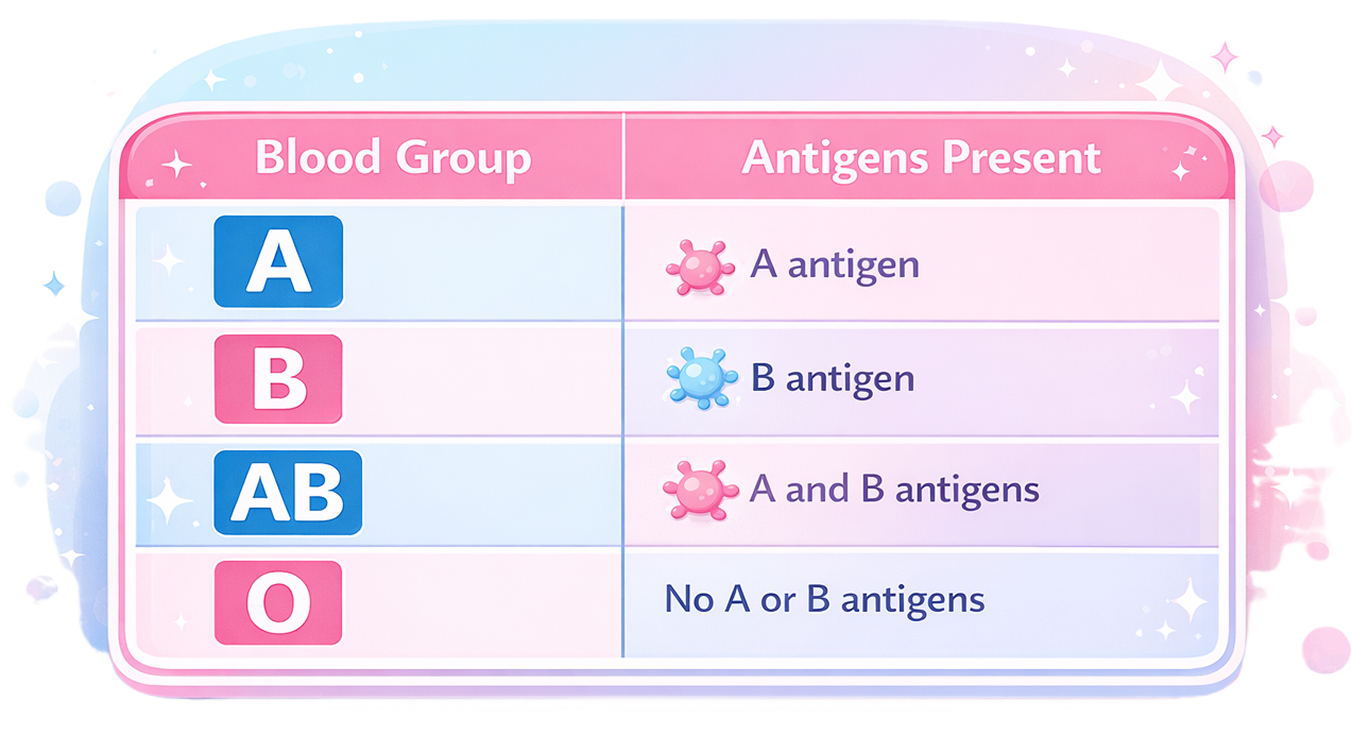
The most widely known blood classification system is the ABO system, which divides blood into four main types: A, B, AB, and O. These types depend on whether red blood cells carry antigens A, B, both, or neither.
The Rh factor, or Rhesus factor, is a protein found on the surface of red blood cells. It is one of the key markers used to determine a person’s blood type.
If your red blood cells contain this protein, your blood type is Rh-positive (Rh+). If your red blood cells do not contain this protein, your blood type is Rh-negative (Rh-). The Rh factor is combined with the ABO blood group system to determine the full blood type. This creates the eight main blood types: A+, A-, B+, B-, AB+, AB-, O+, and O-.

Blood compatibility is important for safe blood transfusions. A person can only receive blood that does not trigger an immune reaction against unfamiliar antigens on red blood cells. Compatibility depends on both the ABO blood group and the Rh factor.

How Blood Types Are Inherited?
Blood types are inherited genetically from biological parents. Each parent passes down genes that determine the ABO blood group and the Rh factor, which together decide a person’s blood type.
Why Early Blood Group and Rh Testing Is Important?
Early blood group and Rh testing during pregnancy helps identify mothers who may need special care. Knowing your Rh status allows healthcare providers to plan timely prevention and protect both current and future pregnancies. Every pregnant woman should have this test during antenatal visits, even if she feels healthy.
How Can Rh Problems Be Prevented?
Rh incompatibility can be prevented with Rh immunoglobulin (RhIg). This injection stops the mother’s body from forming harmful antibodies. RhIg is usually given during pregnancy and after delivery if the baby is Rh-positive. It may also be given after miscarriage, abortion, or pregnancy-related bleeding. Speak to your healthcare provider during your first antenatal visit.
What Is HDFN (Hemolytic Disease of the Fetus and Newborn)?
If Rh sensitization is not prevented, antibodies from the mother can destroy the baby’s red blood cells. This condition is known as Hemolytic Disease of the Fetus and Newborn (HDFN). HDFN can lead to severe anemia, jaundice, heart failure, brain damage, still birth or newborn death. The good news is that HDFN is largely preventable with early testing and timely medical care.
Why Does the Rh Factor Matter in Pregnancy?
The Rh factor is particularly significant during pregnancy. If an Rh-negative mother is carrying an Rh-positive baby, there is a risk of Rh incompatibility. This occurs when the mother’s blood and the baby’s blood mix, potentially leading the mother to produce antibodies against the Rh-positive blood cells.
What Is Rh Sensitization?
Rh sensitization happens when an Rh-negative mother develops antibodies after exposure to Rh-positive blood. It usually does not affect the first pregnancy. But these antibodies can cross the placenta in future pregnancies and attack the baby’s red blood cells causing hemolytic disease of the newborn.